Manger of Incidentals

phenomenon


A stunning poem came my way, and I had to feature it in my latest book project.

For you, here is the  poem

We are surrounded by the absurd excess of the universe.
By meaningless bulk, vastness without size,
power without consequence. The stubborn iteration
that is present without being felt.
Nothing the spirit can marry. Merely phenomenon
and its physics. An endless, endless of going on.
No habitat where the brain can recognize itself.
No pertinence for the heart. Helpless duplication.
The horror of none of it being alive.
No red squirrels, no flowers, not even weed.
Nothing that knows what season it is.
The stars uninflected by awareness.
Miming without implication. We alone see the iris
in front of the cabin reach its perfection
and quickly perish. The lamb is born into happiness
and is eaten for Easter. We are blessed
with powerful love and it goes away. We can mourn.
We live the strangeness of being momentary,
and still we are exalted by being temporary.
The grand Italy of meanwhile. It is the fact of being brief,
being small and slight that is the source of our beauty.
We are a singularity that makes music out of noise
because we must hurry. We make a harvest of loneliness
and desiring in the blank wasteland of the cosmos.

It became the focus and inspiration for my exploration of a new book project.

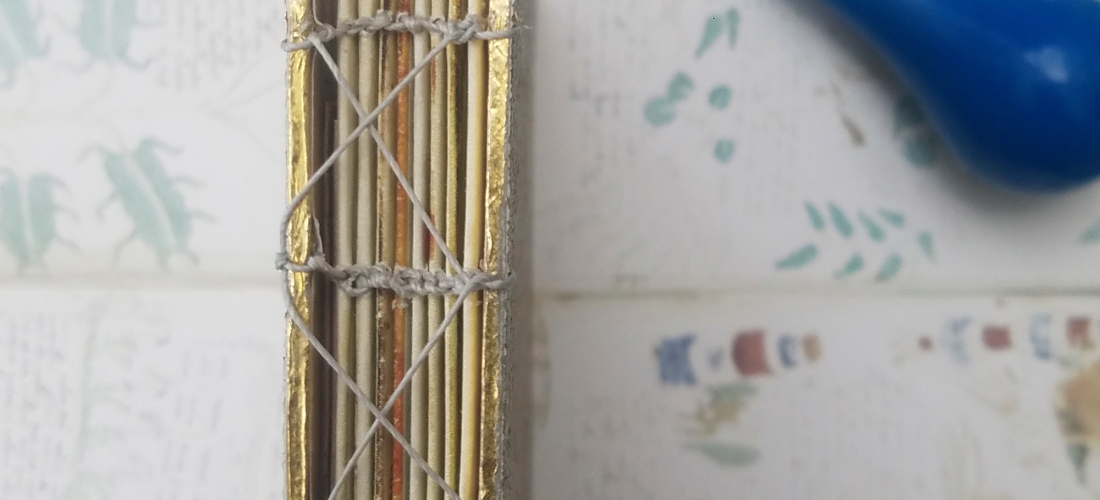
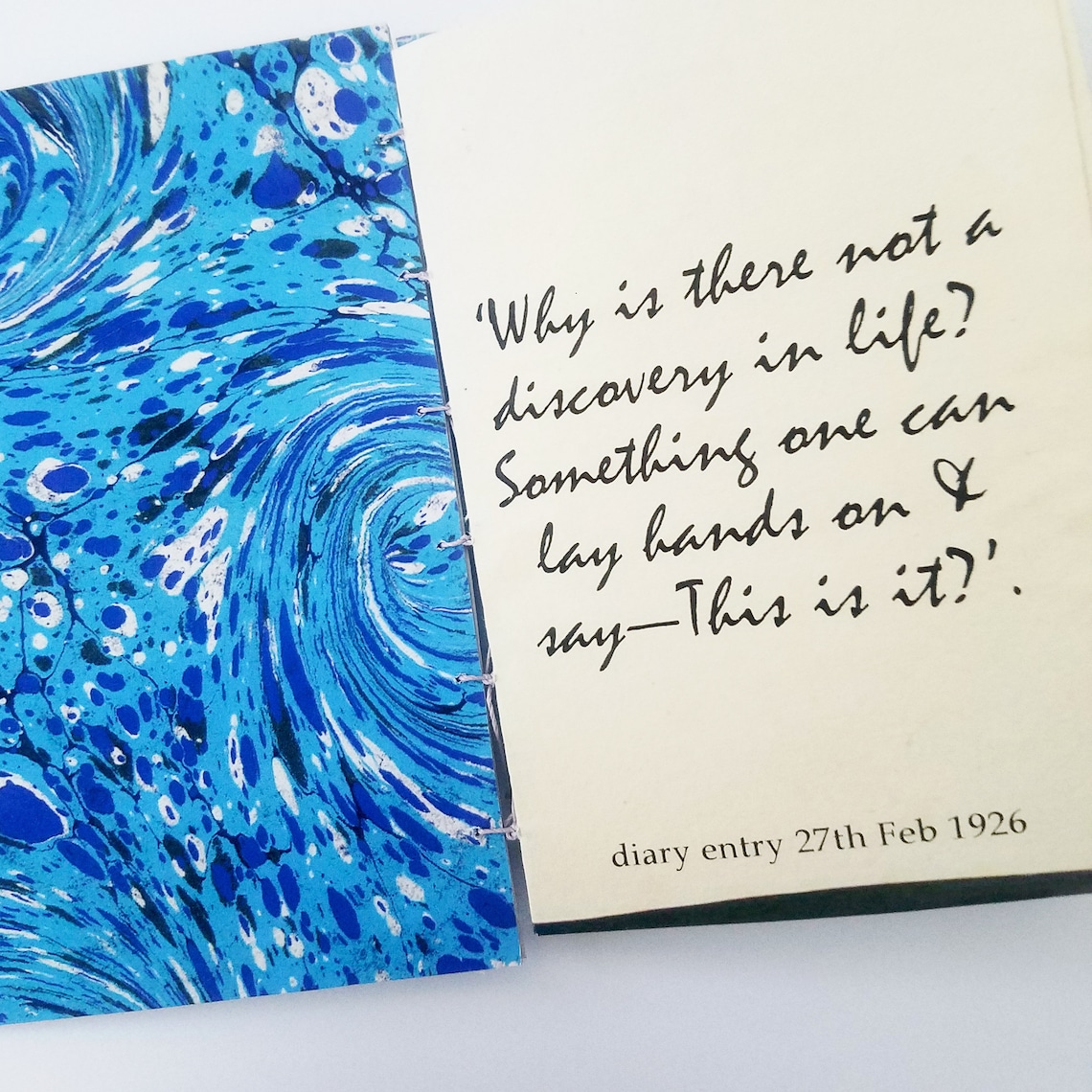
This handmade small book is a lovingly crafted individual piece of work that attempts to reflect the wonder and the majesty of being human through poetry, observation and artwork. It features as it’s main focus a poem by Jack Gilbert. This is a poem that reflects my own feelings of paradox and powerlessness in a complicated, curious world. That is why I have called the project ‘phenomenon’, drawn from the poem /

Jack Gilbert may not be as known to the English audience, but his poetry is inspired by the likes of Ezra Pound and T.S .Eliot, and he combines a meticulous use of language with the control of a master, so that the reader is drawn in and can feel meaning. That is the power of good poetry, the encapsulation and distilling of ideas and feelings, in an attempt to communicate meaning.

I chose Kandinsky’s ‘Circles’ as the visual accompaniment to the poem, and for me it works wonderfully well. I wanted to marry these visions of expanse with the historical expressions of how the universe was once depicted.. We live in an expanding universe, and a personal world of continual renewal and exploration. Human’s have always experienced the world as an environment of change, and it is our challenge to develop methods to sustain ourselves and our companions on this fascinating planet .

If you want to see more of my hand made books you don’t need to go far, there are some featured in this blog on My Etsy Page.


‘Ignorance and presumption rebuked’

Could it be that Petrarch had the same concerns seven hundred years ago without the advent of social media? Some things change, some things stay the same.  Considered to be the father of humanism, and to instigate the Renaissance, Petrarch embodied a new and vigorous way of thinking, disdaining the centuries preceding as a time he dubbed ‘ the Dark Ages’.  I would have wanted to have sat down and shared a meal with him.  His father chose for him the study of law, which he deplored and left.  He favoured contemplative study, and looking back to the classicism of Ancient Rome and Greece, creating a body of writing as fresh and as cogent today as when he wrote them.

Let me say, then, that I detect in your writings a constant effort to make a display…… As Seneca has said, it is unseemly for a grown man to go gathering nosegays; he should care for fruit rather than flowers. ….
You seem to take delight in exploring new regions, where the paths are unknown to you and you are sure to go astray once in a while or fall into a pit. You like to follow the example of those who parade their know ledge before their doors, like so much merchandise, while their houses within are empty. Ah ! it is safer to be something than to be always trying to seem to be. Ostentation is difficult and dangerous. Moreover, just when you are most desirous of being deemed great, innumerable little things are sure to happen which not only reduce you to your true dimensions but bring you below them. No one intellect should ever strive for distinction in more than one pursuit. Those who boast of preeminence in many arts are either divinely endowed or utterly shameless or simply mad. Who ever heard of such presumption in olden times, on the part of either Greeks or men of our own race ? It is a new practice, a new kind of effrontery. To-day men write up over their doors inscriptions full of vainglory, containing claims which, if true, would make them, as Pliny puts it, superior even to the law of the land. But when one looks within-ye gods! what emptiness is there! So, in conclusion, I beg you, if my words have any weight, to be content within your own bounds. Do not imitate these men who are all promise and no performance; who, as the comic poet has said, know everything and yet know nothing. There is a certain wise old Greek proverb that bids everyone stick to the trade that he understands. Farewell.

Francis Petrarch (1304 – 1374)
Familiar Letters
From James Harvey Robinson, ed. and trans.
Petrarch: The First Modern Scholar and Man of Letters
(New York: G.P. Putnam, 1898)

PhisickAgainstFortune Petrarch254 dialogues attempt to explore the effects of good and bad fortune on the soul. This is Petrarch’s book of practical philosophy, completed in 1360, A German illustrated version was published in August 1532 and remained in circulation for two centuries having a significant cultural impact .

Griselda by Petrarch

Petrarch was very taken by a story told to him in the Italian vernacular by his friend Boccaccio and was so struck by it that he felt the need to retell it in Latin. this became the Story of Griselda, in turn admired by Chaucer who Petrarch may or may not have met. Chaucer related the story as part of his Canterbury Tales, known as the Clerk’s Tale.

One of the features of Petrarch that strikes me is his introspection.  This is not a popular character trait in modern times, where speed of response and immediate gratification is seemingly moulding a different sensibility to the human condition.  But I like him all the more for demonstrating that and for producing work of lasting importance.  During his life he chose to explore a mountain, and contemplated who to take with him, settling finally on his younger brother. This would not be an easy ascent, and at the summit he reputedly drew upon a book of St Augustine for inspiration or solace , and according to his record the book fell open at this point, 

And men go about to wonder at the heights of the mountains, and the mighty waves of the sea, and the wide sweep of rivers, and the circuit of the ocean, and the revolution of the stars, but themselves they consider not.

Back to Petrarch;

“I closed the book, angry with myself that I should still be admiring earthly things who might long ago have learned from even the pagan philosophers that nothing is wonderful but the soul, which, when great itself, finds nothing great outside itself. Then, in truth, I was satisfied that I had seen enough of the mountain; I turned my inward eye upon myself, and from that time not a syllable fell from my lips until we reached the bottom again. [...] [W]e look about us for what is to be found only within. [...] How many times, think you, did I turn back that day, to glance at the summit of the mountain which seemed scarcely a cubit high compared with the range of human contemplation [...]“

Thanks go to 
http://petrarch.petersadlon.com/books.html
 for his insight into a fascinating member of the human race.

Lacking simplicity, some goodness and mostly truth, who’s the father?

tolstoy quute, illustrated by anne corr

Tolstoy was on my mind this morning, waking from a troubled dream of being bitten by fleas, leaving a home, my dead father ignoring my pleas for him to remove a mosquito sting from my finger (fatal) and making choices about what to abandon.

I draw nothing from the dream except the recurrent disquiet about a father who died over a decade year ago having a greater presence in my life than the father who lived and chose to have very little to do with his offspring once we had left the parental home.

The biggest legacy my father left me was the doubt he placed in my heart that I am capable of loving.

In response to his approach to parenting, I have held it forever in my head that the only real success is to love and be loved.

Where does Tolstoy come in?  He has replaced the parental authority with the narrative of a faithful, dependable mentor.  His attempt to understand how to live a meaningful life is not my answer, but it resonates with me that others have the same painful search for meaning in their lives.  He is more than a collection of quotable phrases; he brings us back to our own wrangling with the complexities and paradoxes of being human.

I recognise this may seem tough on my own father, maybe. I don’t know. I am both grateful to him for his fathering when I was a young girl, and angry with him for his refusal to have any intimate connection after I had grown into a fully fledged adult.

My father whisked hair
from teary eyes,
soothed my nights,
stuck as I was
in fright of darkness,
and unknown.
Never the mother,
then remote,
submerged and distant.

His was a lighter touch.
Lighter, and more temporary,
lasting the length of  moments
preceding infant slumber.
It didn’t last the journey,
away from childish
delightedness.
His sorrow grew,
years adding inevitably
to his progeny. It was
our innocence he loved,
and not our selves, cloaked in
mysterious adolescent armour
of insouciance, sex and rock
‘n roll.  His loss, our youth, his
own undiscovered clamour
for rebellion, and lost cause.

I know more the man, and as
I grew, so did the distance. It
was not his death that parted
us, but time and choice.
I spin in orbits outside his own,
but missing the shadow of
his sun.

Anne Corr

A Dog’s Life

I am a private person, so I am inviting you in to my life today – just a portion of it, inviting you to meet Digger, my hound, companion, walkmate.  I don’t know whether he knows – I suspect he does – just how important he is to how well I live. By nature solitary and lazy, I am unlikely to don outerwear and walk around the local park twice a day, meeting on the way a host of canine friends and their owners, in turn funny, sad, friendly, caring and occasionally hostile. Digger has replaced the role of the playground, my erstwhile opportunity to converse and exchange with people who become more than acquaintance, make up a community. So in celebration of our canine friends everywhere I offer up my poem.  How very daring of me!!

A Dog’s Life

Although  dog is bored,

dog does not complain.

An occasional sigh, expulsion

of disgruntled breath.

I tell him I’m bored too,

but not enough to fetch his lead.

He settles for a rub and a tickle

or two. I like his composure.

‘Pleasure is the absence of pain’  I tell him,

and comma-like, his presence comforts me.


He has accepted me, after abandonment.

Has stories I will never hear, a life

lived without and before us. We are not

so dissimilar then. New lives constructed

when the disappointments and the blows

bring down the here and nows.


He shows how it is possible, to decide

to continue. To re-emerge, perhaps

never to see the world the same again.

The walks, though unfamiliar , unnerving

still contain smells too exciting to ignore.

Digger Anne Corr